Six Sigma Analyze : 3 Failure mode and effects analysis (FMEA)
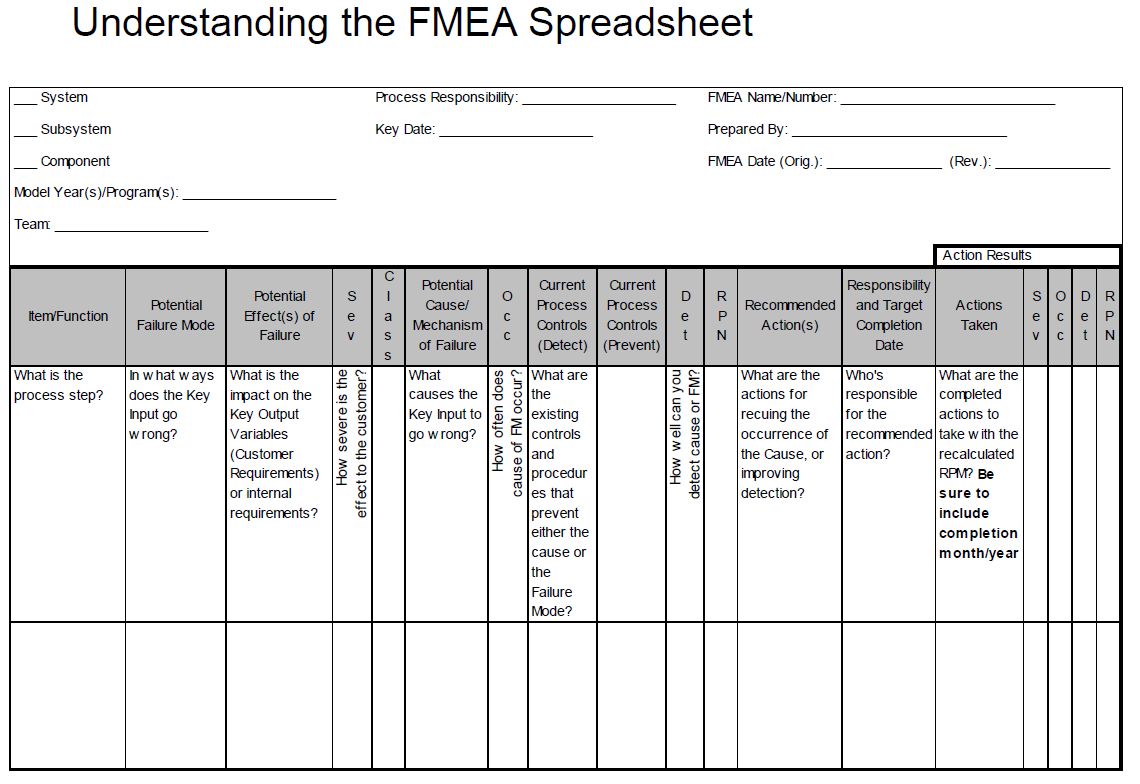
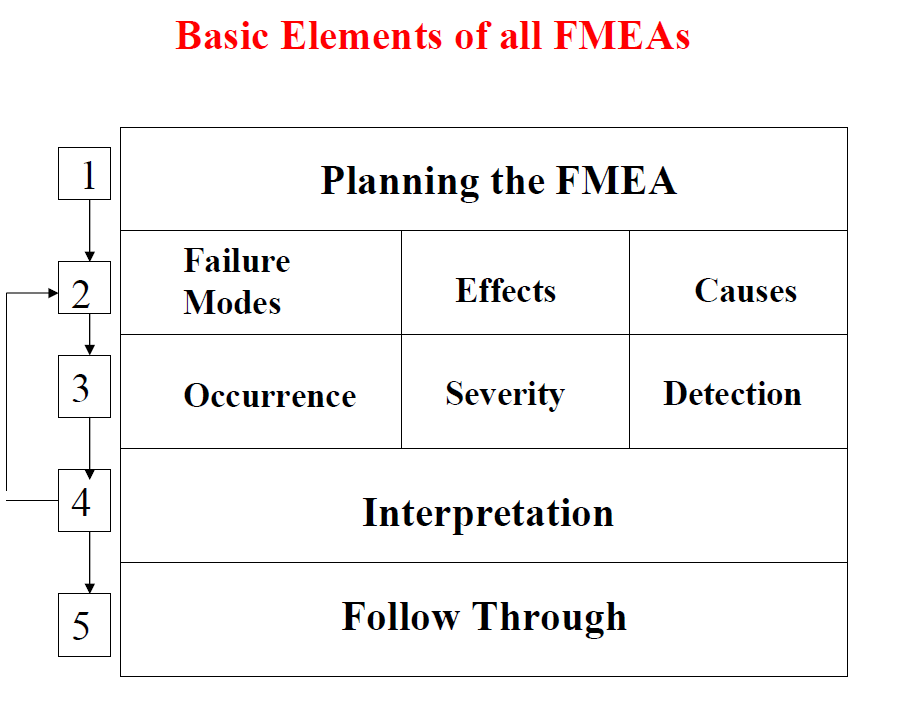
FMEA –Definition Purpose Objectives Calculating Risk Priority Numbers (RPN) Process FMEA (PFMEA) Interpreting uses and practical applications Design FMEA (DFMEA) Failure mode = occurrence effect = severity cause = detection multiply all RPN
FMEA –Definition
A Failure Mode and Effects Analysis (FMEA) is a disciplined procedure that:
-Recognizes and evaluates the potential failure of a product/ process and the effects of that failure
-Identifies actions that would eliminate or reduce the chance of the potential failure occurring
-Documents the process
FMEA –Purpose
General/overall purposes of a FMEA:
•Improves the quality, reliability and safety of the evaluated process and products
•Reduces process and product redevelopment timing and cost
•Documents and tracks actions taken to reduce risk
•Aids in the development of robust process and product control plans
•Helps practitioners prioritize and focus on eliminating product and process concerns and/or helps prevent problems from occurring
•Improves customer/consumer satisfaction
FMEA –Objectives
FMEA reduces the risk of failures by:
•Aiding in the evaluation of design requirements and design alternatives
•Increasing the probability that potential failure modes, ranked according to their effect on the customer (CTQs), have been considered in the development process
•Aiding in the development of thorough and efficient validation plans
•Providing future reference for analyzing field concerns and evaluating design process changes
Calculating Risk Priority Numbers (RPN)
The order in which risk should be addressed:
SEV
Criticality (SEV ×OCC)
RPN = SEV ×OCC ×DET
Interpreting Risk Priority Numbers (RPN)
•RPN numbers should not be used to prioritize risk
•As a general rule, special attention should be given to high severity, then to high criticality (SEV x OCC) regardless of RPN
•The RPN values must be recalculated once corrective actions have been taken
FMEA –Definition
A Failure Mode and Effects Analysis (FMEA) is a disciplined procedure that:
-Recognizes and evaluates the potential failure of a product/ process and the effects of that failure
-Identifies actions that would eliminate or reduce the chance of the potential failure occurring
-Documents the process
FMEA –Purpose
General/overall purposes of a FMEA:
•Improves the quality, reliability and safety of the evaluated process and products
•Reduces process and product redevelopment timing and cost
•Documents and tracks actions taken to reduce risk
•Aids in the development of robust process and product control plans
•Helps practitioners prioritize and focus on eliminating product and process concerns and/or helps prevent problems from occurring
•Improves customer/consumer satisfaction
FMEA –Objectives
FMEA reduces the risk of failures by:
•Aiding in the evaluation of design requirements and design alternatives
•Increasing the probability that potential failure modes, ranked according to their effect on the customer (CTQs), have been considered in the development process
•Aiding in the development of thorough and efficient validation plans
•Providing future reference for analyzing field concerns and evaluating design process changes
Calculating Risk Priority Numbers (RPN)
The order in which risk should be addressed:
SEV
Criticality (SEV ×OCC)
RPN = SEV ×OCC ×DET
Interpreting Risk Priority Numbers (RPN)
•RPN numbers should not be used to prioritize risk
•As a general rule, special attention should be given to high severity, then to high criticality (SEV x OCC) regardless of RPN
•The RPN values must be recalculated once corrective actions have been taken
FMEA uses and practical applications
•Industries that frequently use FMEA:–Consumer products—automotive/toys/home appliances–Aerospace, NASA, DoD–Process industries—Chemical processing
Design FMEA (DFMEA)
is used to analyze designs before they are released to production.
•DFMEA should always be completed well in advance of a prototype build.
•The inputs to DFMEA are functional requirements of the product/subsystem/component
•The outputs of DFMEA are (1)list of actions to prevent causes or to detect failure modes, and (2)history of actions taken and future activity.
The DFMEA can help the product development process by:
1. Estimating the effects on all customer segments,
2. Assessing and selecting design alternatives,
3. Helping to develop an efficient validation phase
4. Inputting the needed information for design for X (e.g. DFMA, DFS, and DFR, DFE, etc)
5. Prioritizing the list of corrective actions. Strategies includemitigation, transferring, ignoring, or preventing the failure modes, improve design from failure stand point
6. Documenting the findings for future reference.
Process FMEA (PFMEA)
is used to analyze manufacturing, assembly, or any other processes.
•Process FMEA should be finished well before Production start
•The focuses of PFMEA are process steps
•The outputs of PFMEA are (1)list of actions to prevent causes or to detect failure modes, and (2)Control plans
The PFMEA is a valuable tool available to help in:
•Identifying potential manufacturing/assembly or production processes causes in order to place controls on either increasing detection or reducing occurrence; or both,
•Prioritizing the list of corrective actions. Strategies include mitigation, transferring, ignoring, or preventing the failure modes,
•Documenting the results of their processes,
•Identifying the potential special process variables from failure stand point that need special controls
•Industries that frequently use FMEA:–Consumer products—automotive/toys/home appliances–Aerospace, NASA, DoD–Process industries—Chemical processing
Design FMEA (DFMEA)
is used to analyze designs before they are released to production.
•DFMEA should always be completed well in advance of a prototype build.
•The inputs to DFMEA are functional requirements of the product/subsystem/component
•The outputs of DFMEA are (1)list of actions to prevent causes or to detect failure modes, and (2)history of actions taken and future activity.
The DFMEA can help the product development process by:
1. Estimating the effects on all customer segments,
2. Assessing and selecting design alternatives,
3. Helping to develop an efficient validation phase
4. Inputting the needed information for design for X (e.g. DFMA, DFS, and DFR, DFE, etc)
5. Prioritizing the list of corrective actions. Strategies includemitigation, transferring, ignoring, or preventing the failure modes, improve design from failure stand point
6. Documenting the findings for future reference.
Process FMEA (PFMEA)
is used to analyze manufacturing, assembly, or any other processes.
•Process FMEA should be finished well before Production start
•The focuses of PFMEA are process steps
•The outputs of PFMEA are (1)list of actions to prevent causes or to detect failure modes, and (2)Control plans
The PFMEA is a valuable tool available to help in:
•Identifying potential manufacturing/assembly or production processes causes in order to place controls on either increasing detection or reducing occurrence; or both,
•Prioritizing the list of corrective actions. Strategies include mitigation, transferring, ignoring, or preventing the failure modes,
•Documenting the results of their processes,
•Identifying the potential special process variables from failure stand point that need special controls